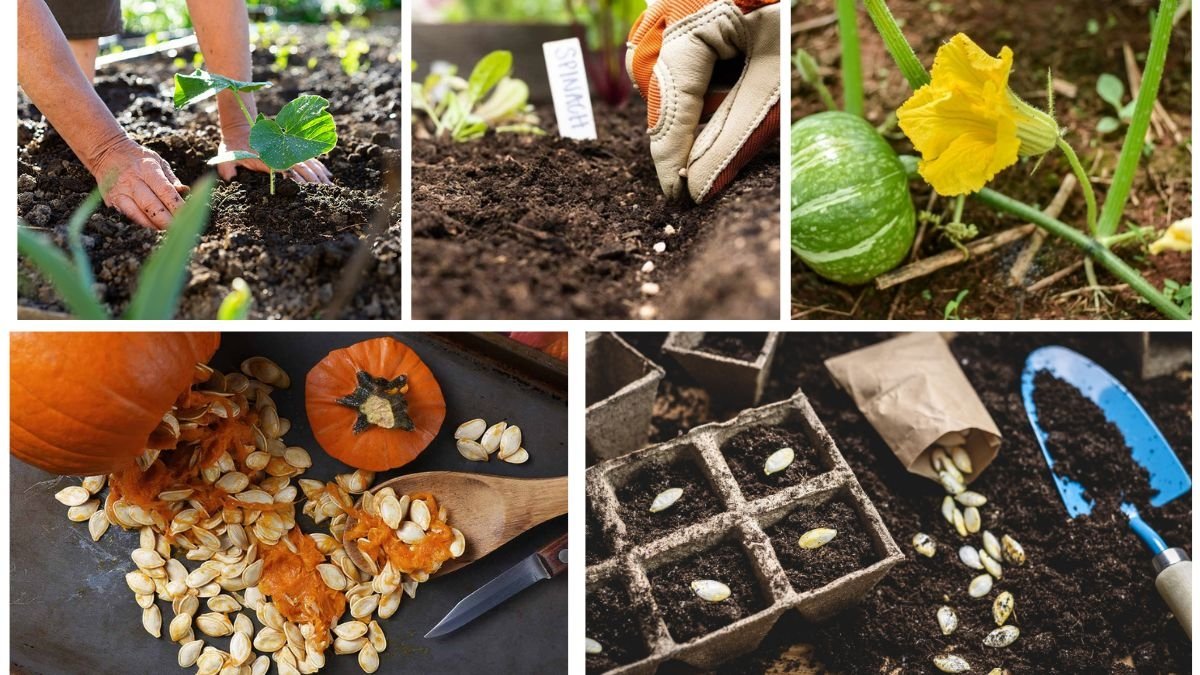
Few gardening experiences are as rewarding as growing your own pumpkins. These bright orange beauties are not only perfect for fall decorations and Halloween jack-o’-lanterns but also make for delicious pies, soups, and roasted seeds. Planting pumpkin seeds is a fun and beginner-friendly project, but it does require some planning and care to ensure a bountiful harvest. With the right timing, soil preparation, and maintenance, you can enjoy a thriving pumpkin patch that will be the highlight of your garden by autumn.
In this guide, we’ll walk you through everything you need to know about how to plant pumpkin seeds, from choosing the right variety to harvesting your pumpkins at the perfect time.
1. Choosing the Right Pumpkin Variety
Before planting, decide what type of pumpkins you want to grow. Pumpkins come in many varieties, each suited to different purposes:
- Jack-o’-Lantern Pumpkins: Medium to large in size, perfect for carving. Popular varieties include Howden and Connecticut Field.
- Mini Pumpkins: Small, decorative types like Jack Be Little or Baby Boo. Great for table displays and children’s gardens.
- Pie Pumpkins: Sweeter, smaller pumpkins used for cooking, such as Sugar Pie or Cinderella.
- Giant Pumpkins: Massive varieties like Atlantic Giant, grown for competitions and impressive displays.
Pick a variety based on your garden space and intended use. Smaller varieties are great for compact gardens, while larger ones need more room to sprawl.

2. When to Plant Pumpkin Seeds
Timing is critical when planting pumpkins because they need warm soil and a long growing season.
- Soil Temperature: Pumpkins thrive when the soil temperature is at least 70°F (21°C).
- Frost-Free Days: Pumpkins need 90–120 frost-free days to mature, depending on the variety.
- Best Planting Time: In most regions, this means planting seeds late spring to early summer (May–June) so the pumpkins are ready for harvest in September–October.
If your growing season is shorter, consider starting seeds indoors 2–3 weeks before transplanting them outside.
3. Preparing the Soil
Pumpkins are heavy feeders, so preparing nutrient-rich soil is essential.
- Choose a Sunny Spot: Pumpkins need 6–8 hours of direct sunlight daily.
- Soil Type: They prefer well-drained, loamy soil with a pH between 6.0 and 6.8.
- Add Organic Matter: Mix in plenty of compost or well-rotted manure before planting to boost fertility.
- Mound Planting: Pumpkins are usually planted in small mounds or “hills,” which help warm the soil and improve drainage. Each mound should be about 18–24 inches wide and 6–8 inches high.
4. Planting Pumpkin Seeds
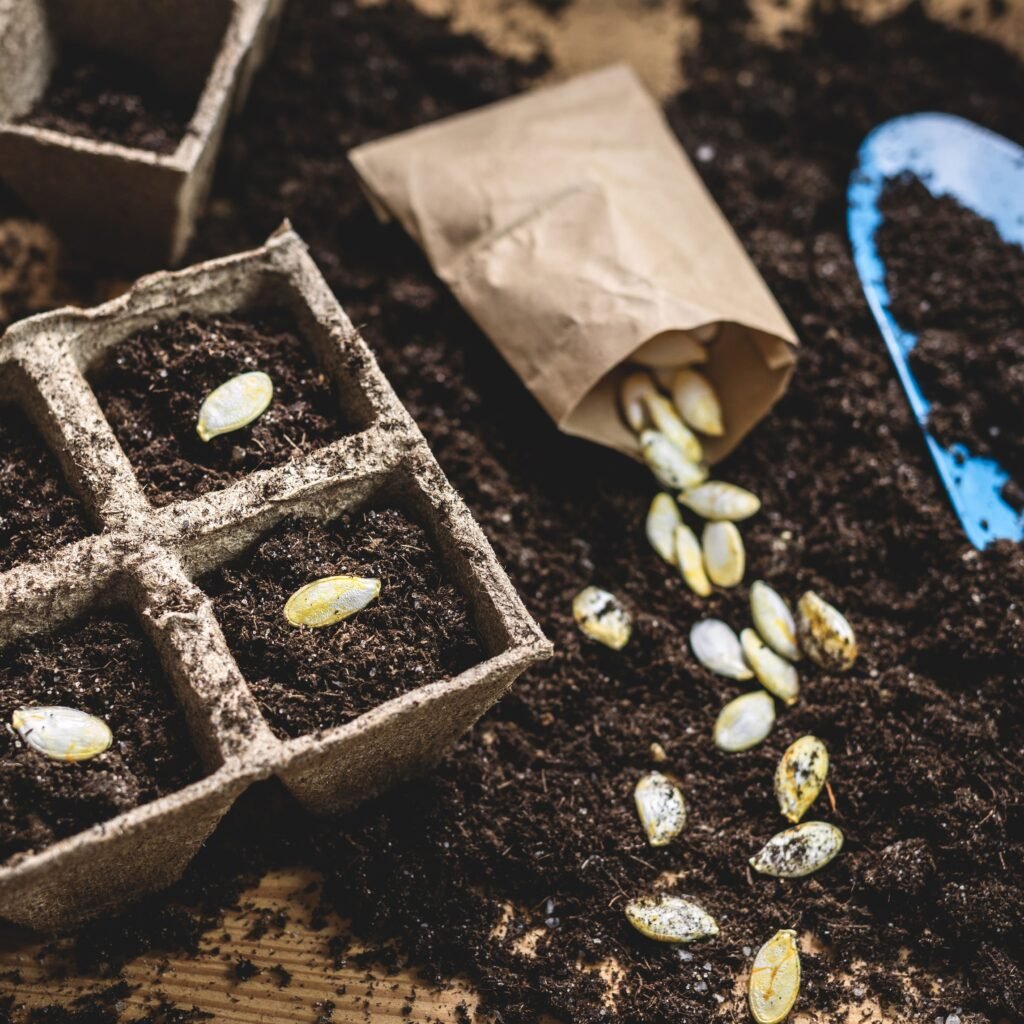
Now comes the exciting part—planting the seeds!
- Spacing: Space pumpkin hills 4–6 feet apart for small varieties and up to 8–12 feet apart for large ones. Pumpkins need room to spread their sprawling vines.
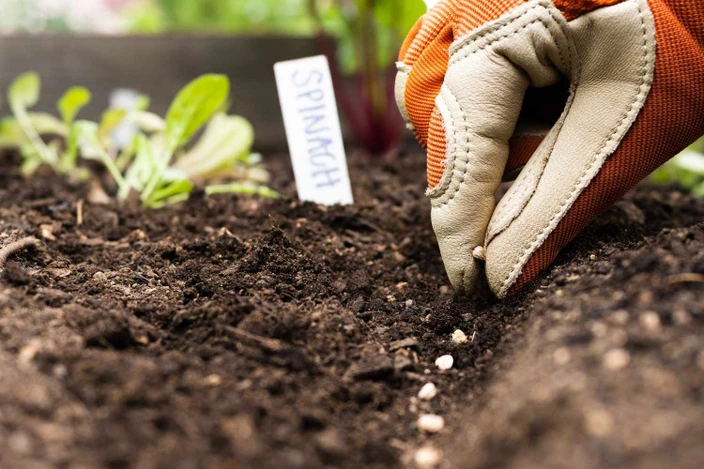
- Planting Depth: Sow 2–3 seeds per hill, about 1 inch deep.
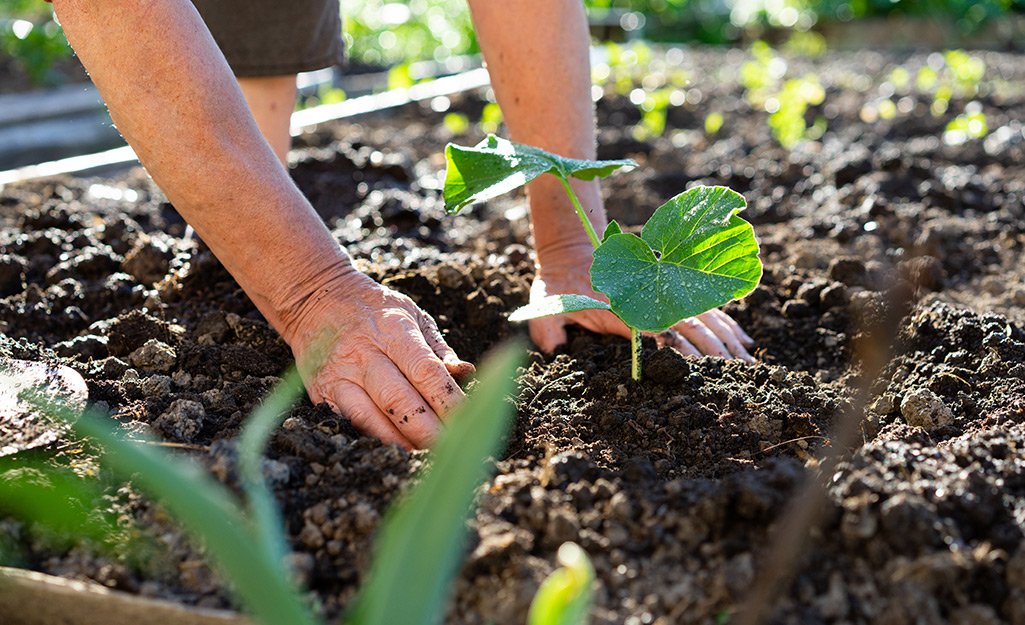
- Thinning: Once seedlings sprout and grow their first true leaves, thin them to the strongest plant in each mound.
Pumpkin seeds typically germinate within 7–10 days, provided the soil is warm and moist.
5. Watering and Feeding Your Pumpkins
Pumpkins need consistent moisture to thrive, especially as they develop large fruits.
- Watering: Provide about 1–2 inches of water per week. Water deeply at the base of the plant rather than overhead to prevent fungal diseases.
- Mulching: Add a layer of mulch around the base to retain soil moisture and suppress weeds.
- Fertilizing:
- Start with a nitrogen-rich fertilizer when plants are young to encourage leafy growth.
- Switch to a phosphorus- and potassium-rich fertilizer once flowers appear to promote fruiting.
6. Supporting Growth and Pollination
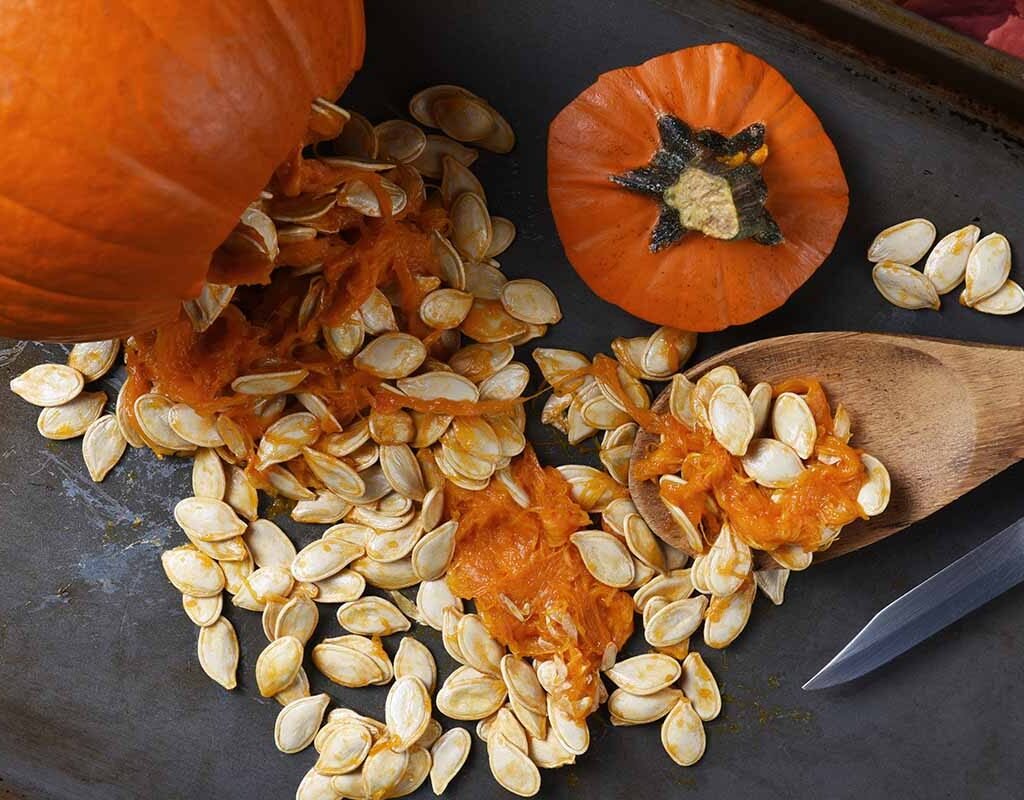
Pumpkins rely on pollination to set fruit, and you can help this process along.
- Encourage Pollinators: Bees are the main pollinators, so avoid using pesticides during blooming. Plant nearby flowers to attract them.
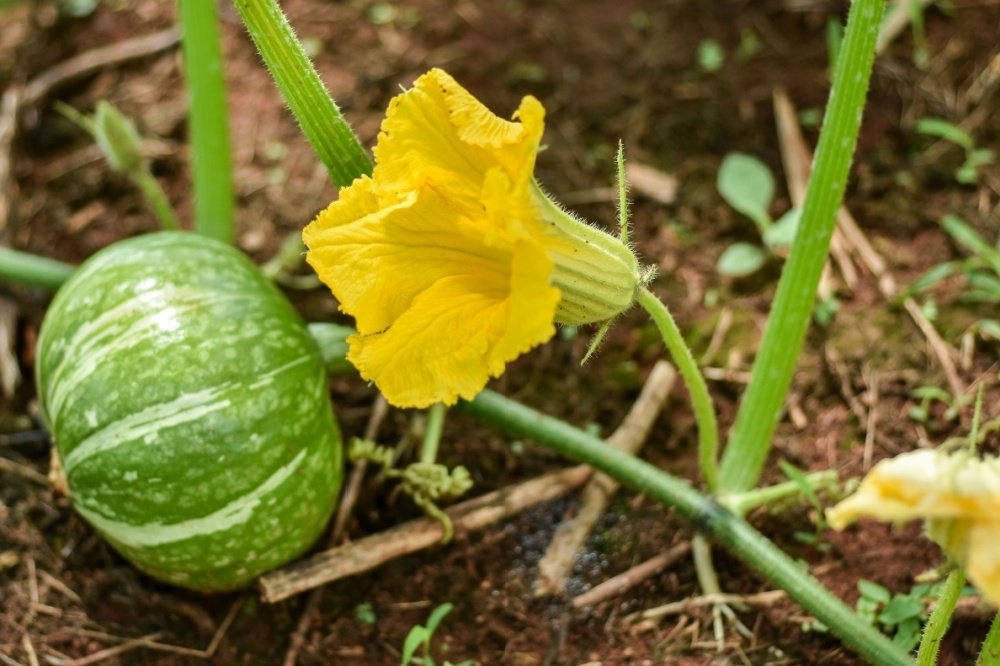
- Hand Pollination: If you notice poor pollination, you can hand-pollinate. Use a small brush or cotton swab to transfer pollen from male flowers (with thin stems) to female flowers (with a tiny baby pumpkin at the base).
- Vine Management: Direct vines as they grow to keep them from taking over your garden. You can gently lift and reposition vines, but avoid breaking them.
7. Protecting Pumpkins from Pests and Diseases
Pumpkins are prone to some common pests and plant diseases.
- Pests:
- Squash bugs: Cause yellowing leaves and damage vines.
- Cucumber beetles: Chew leaves and transmit bacterial wilt.
- Aphids: Suck sap from leaves, causing curling.
Use floating row covers early in the season or organic insecticides if infestations occur.
- Diseases:
- Powdery mildew: White powdery spots on leaves. Improve air circulation and use fungicides if needed.
- Downy mildew: Yellow or brown patches. Prevent with good spacing and watering practices.
Healthy, well-fed plants are more resistant to pests and disease.
8. Caring for Developing Pumpkins
Once pumpkins begin forming, a little extra care helps them grow beautifully.
- Support Pumpkins: Place pumpkins on a piece of cardboard, straw, or wood to keep them off damp soil and prevent rot.
- Limit Fruits: For larger pumpkins, pinch off excess fruit and leave only 1–2 per plant so the plant’s energy goes into fewer, bigger pumpkins.
- Prune Vines: Cut back overly long vines once fruits have set to direct energy toward ripening.
9. Harvesting Pumpkins
The best part of pumpkin growing is harvest time!

- When to Harvest: Pumpkins are ready when they are fully colored (orange, white, or their variety color) and the skin is hard. This usually happens in September–October.
- Stem Check: The stem should be hard and starting to dry.
- Harvesting Method: Cut pumpkins from the vine with pruning shears, leaving a 3–4 inch stem attached. Never pull them off by hand.
- Curing: Let pumpkins sit in the sun for about 7–10 days to harden their skins and extend storage life.
10. Storing and Using Pumpkins
Pumpkins can be enjoyed long after harvest if stored correctly.
- Storage Conditions: Keep pumpkins in a cool, dry place (50–55°F) with good ventilation. They can last several months under proper conditions.
- Uses:
- Decorative: Carve jack-o’-lanterns, paint them, or use them in fall displays.
- Culinary: Roast seeds, bake pies, make soups, or puree for desserts.
- Composting: Any leftover pumpkins after the season can be composted to enrich your soil for next year.
Final Thoughts
Growing pumpkins from seeds is a joyful gardening experience that brings a true sense of accomplishment. From planting in spring to harvesting in fall, each stage offers excitement and learning. By choosing the right variety, preparing the soil properly, and giving consistent care, you’ll be rewarded with plump, healthy pumpkins ready for Halloween fun or tasty autumn dishes.
Whether you’re starting a small backyard patch or dreaming of a large pumpkin garden, planting pumpkin seeds is the perfect way to celebrate the seasons and connect with nature.

Leave A Comment